HKD 8,000,000 - 9,500,000
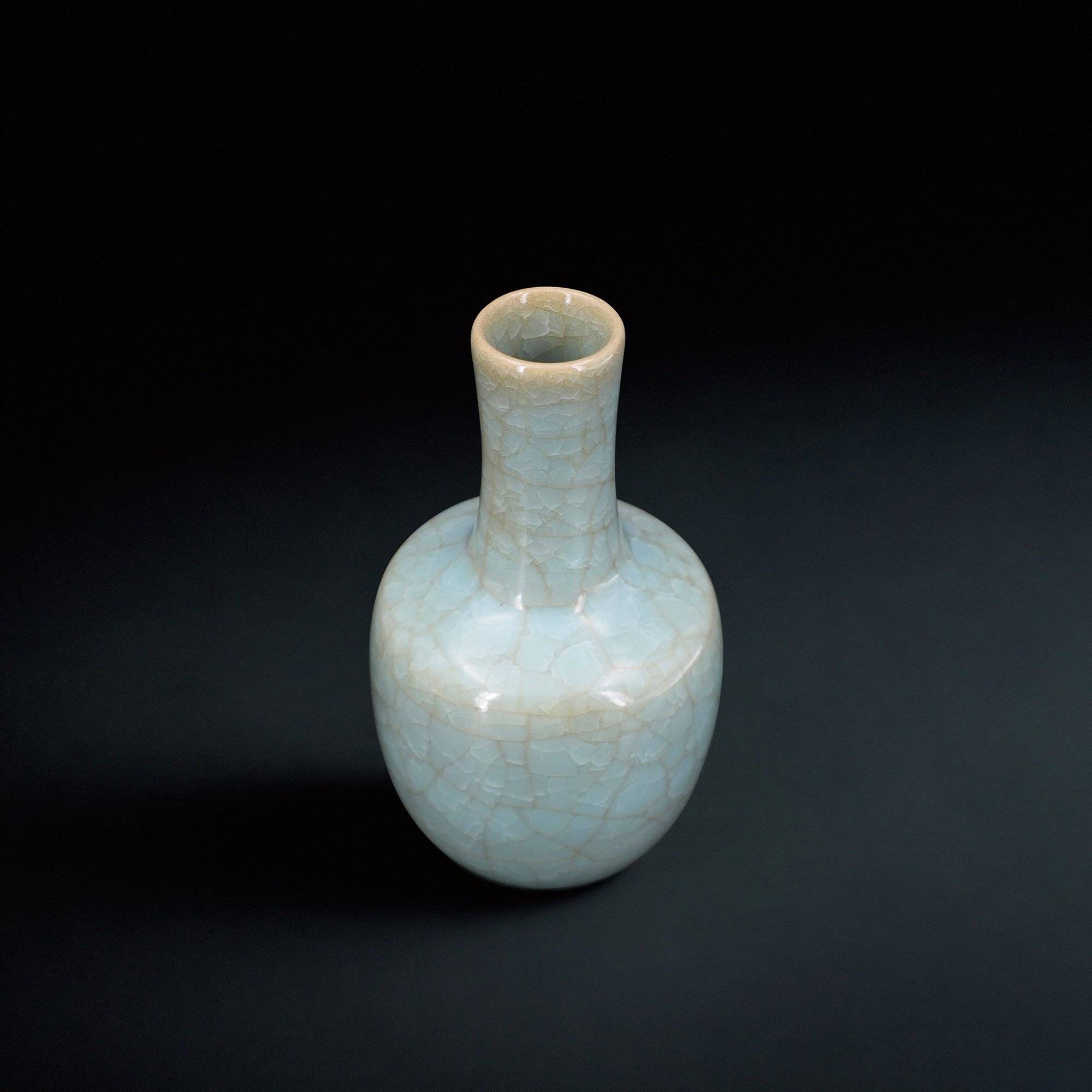
The present vase measures 15 cm in height, with a mouth diameter of 3.2 cm, a base diameter of 7.4 cm, and a weight of 350 g. Compact and finely proportioned, it possesses a refined elegance characteristic of Northern Song ceramics.
The form of the paper-mallet vase is derived from the traditional paper mallet used in ancient papermaking. Its restrained silhouette is remarkably simple and pure, with a long straight neck, gently expanding body, angular shoulder, cylindrical rounded belly and subtly tapering base. Free of superfluous ornament, the vessel relies entirely on the elegance of its profile. Viewed in silhouette, the softly rounded contours convey both composure and grace. Whether standing upright or viewed from an angle, the form retains a sense of balance and vitality, perfectly embodying the Song-dynasty aesthetic ideal of refined simplicity.
The most captivating feature is its delicate sky-blue glaze. Often likened to the subtle blue of the sky after rain, the glaze is even, lustrous and softly luminous, with a restrained elegance rather than an assertive brilliance. Subtle variations in tone emerge as the light shifts across the surface, creating a sense of depth and movement. The relatively thick glaze has a warm, jade-like quality, with a smooth and finely tactile surface that conveys the distinctive character of Ru ware.
The entire surface is covered with a natural ice-crackle pattern, one of the celebrated characteristics of Ru ware. These crazing lines resulted naturally from the differing rates of contraction between glaze and body during firing, yet were appreciated by Song connoisseurs as a manifestation of spontaneous beauty. Fine intersecting cracks spread naturally across the sky-blue glaze, varying in depth and density like fractured ice over a frozen lake. Each network of crazing is unique, giving every vessel an individual character.
The base retains the distinctive spur marks associated with Ru ware, comprising three small dark firing supports. These tiny marks are an important indication of the firing technique employed at the Northern Song Ru kilns. The vessels were fully glazed, including the foot, and were supported on minute spurs during firing to prevent adhesion to the kiln shelf. Once firing was complete, the supports were removed, leaving small sesame-seed-sized marks on the base, a hallmark of the sophisticated production methods of Ru ware.
Highly favored by the Northern Song imperial court, Ru ware was produced for palace use over a comparatively brief period, and surviving examples are exceptionally rare. The present paper-mallet vase dispenses entirely with superfluous decoration, relying instead on the harmony of form, glaze and naturally occurring crazing to create its refined aesthetic effect. There are no painted flowers or birds, nor any applied relief ornament; its quiet and contemplative surface instead evokes the restrained, introspective spirit associated with the literati culture of the Song dynasty.
After nearly a millennium, the glaze retains its gentle and understated luminosity, with a maturity and warmth that further enhance the rarity and appeal of this remarkable vessel.